Research Reveals Urgent Need to Strengthen Tobacco Control Laws
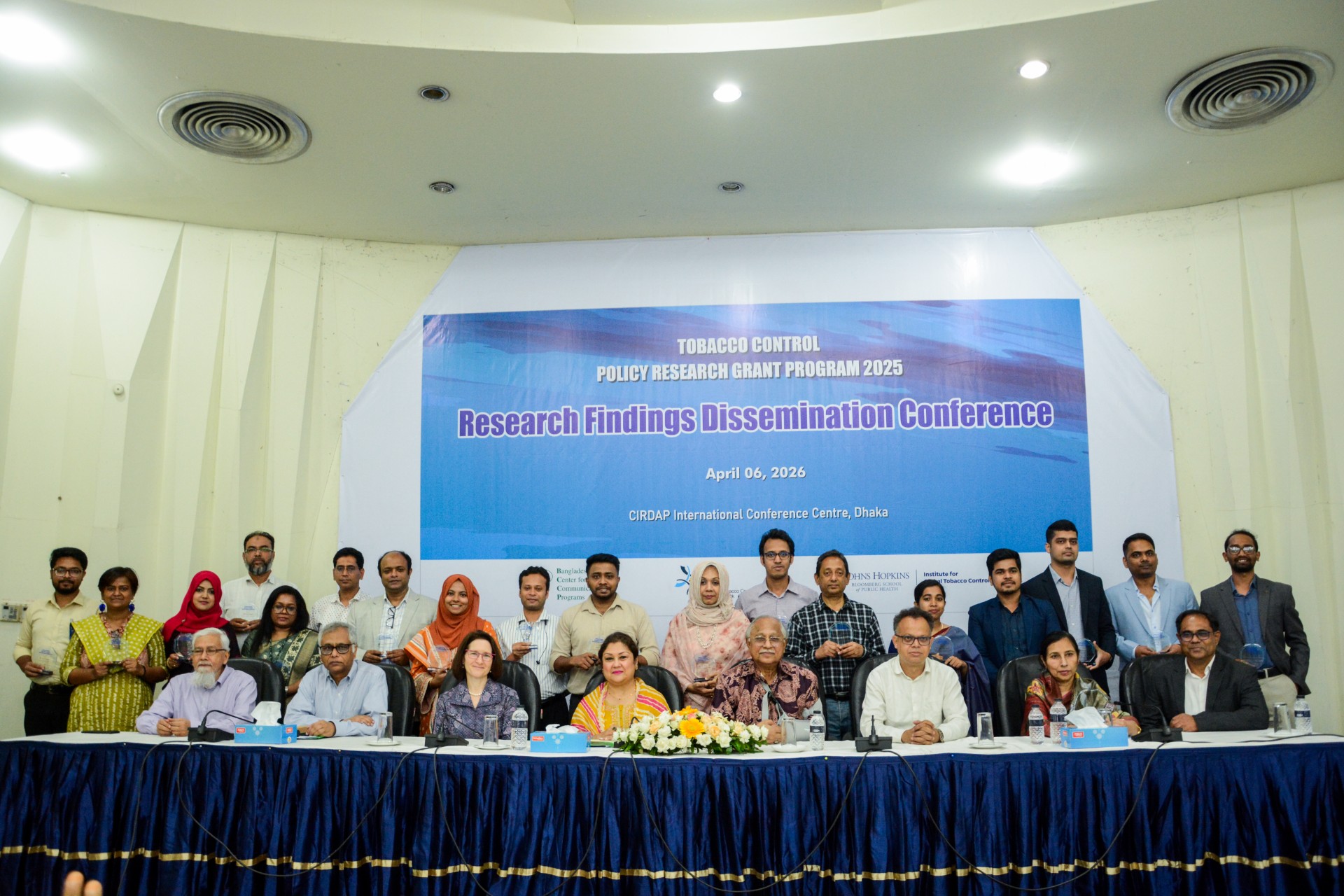
The Bangladesh Center for Communication Programs (BCCP) has marked 13 years of advancing tobacco control in Bangladesh through the Tobacco Control Policy Research Grant Program, which regularly reflects its achievements through its annual Research Findings Dissemination Conference. BCCP and the Bangladesh Tobacco Control Research Network (BTCRN) in collaboration with the Institute for Global Tobacco Control (IGTC), Baltimore, USA, organized the Research Findings Dissemination Conference today at the CIRDAP International Conference Center in Dhaka. The findings of seven studies conducted under the 2025 program, along with selected in-country studies, were presented at the Conference.
Findings of these studies highlight persistent gaps in the implementation of existing tobacco control laws, despite high public awareness and strong support for tobacco-free environments. One study revealed that widespread violations of smoke-free laws continue in public places such as railway stations and trains, driven by minimal enforcement, unclear authority among responsible officials, and structural limitations in the current legal framework, including weak monitoring mechanism. At the same time, another study found that tobacco depiction on OTT platforms often lack proper health warnings levels highlights the absence of enforceable standards for emerging media, contributing to the normalization of tobacco use, particularly among young people. This broader pattern of weak regulation is also evident in educational institutions, where easy access to tobacco products, including single-stick sales, close proximity of tobacco outlets, and promotional practices, persist despite existing restrictions, reinforcing affordability and influencing student smoking behavior.
Moreover, the smokeless tobacco sector remains largely unregulated, with informal production, weak licensing systems, and fragmented oversight across the supply chain, alongside limited monitoring beyond the retail level. These systemic gaps are further reflected in the rise of e-cigarettes, which remain accessible through informal and illicit channels despite existing restrictions, and are promoted on digital platforms. Another study indicates that most young users perceive social media as a key driver of e-cigarette use, while marketing strategies, peer influence, and the perception of vaping as modern and less harmful continue to drive uptake among youth.
Ms. Sheikh Momena Moni, Additional Secretary (WH Wing), Health Services Division, Ministry of Health and Family Welfare, graced the occasion as the chief guest during the opening session of the conference. While Mr. Md. Akhteruzzaman, Director General (Joint Secretary), National Tobacco Control Cell was present in the closing session as the chief guest. The opening program was chaired by Prof. Dr. Mohammad Shorif Uddin, Vice Chancellor, Green University while the closing program was chaired by Dr. Nawzia Yasmin, President, BTCRN.
The conference also welcomed other distinguished guests of honor, including Prof. Dr. Syed Zakir Hossain, NCDC, DGHS; Dr. Rajesh Narwal, Deputy WHO Representative to Bangladesh; Dr. Joanna Cohen, Director, Institute for Global Tobacco Control; Bloomberg Initiative Partner Representatives; and Mr. Mohammad Shahjahan, Director and CEO, BCCP. Around 250 participants from relevant Government ministries and departments, universities, BI partners and grantees and some reputed journalists and reporters from the media agencies attended the event.
BCCP remains committed to supporting evidence-based policymaking and fostering multi-stakeholder collaboration to ensure that laws are not only well-designed but also effectively implemented, moving Bangladesh closer to a truly tobacco-free future.